

Introduction
Electric vehicles are becoming an important part of the global transition towards cleaner transportation. They can reduce dependence on petrol and diesel, provide a quieter driving experience, and offer lower running costs in many situations. However, charging remains a major consideration for electric vehicle owners. Drivers need access to electricity, convenient charging points, and enough battery capacity for their daily journeys.
Solar energy could help address some of these challenges.
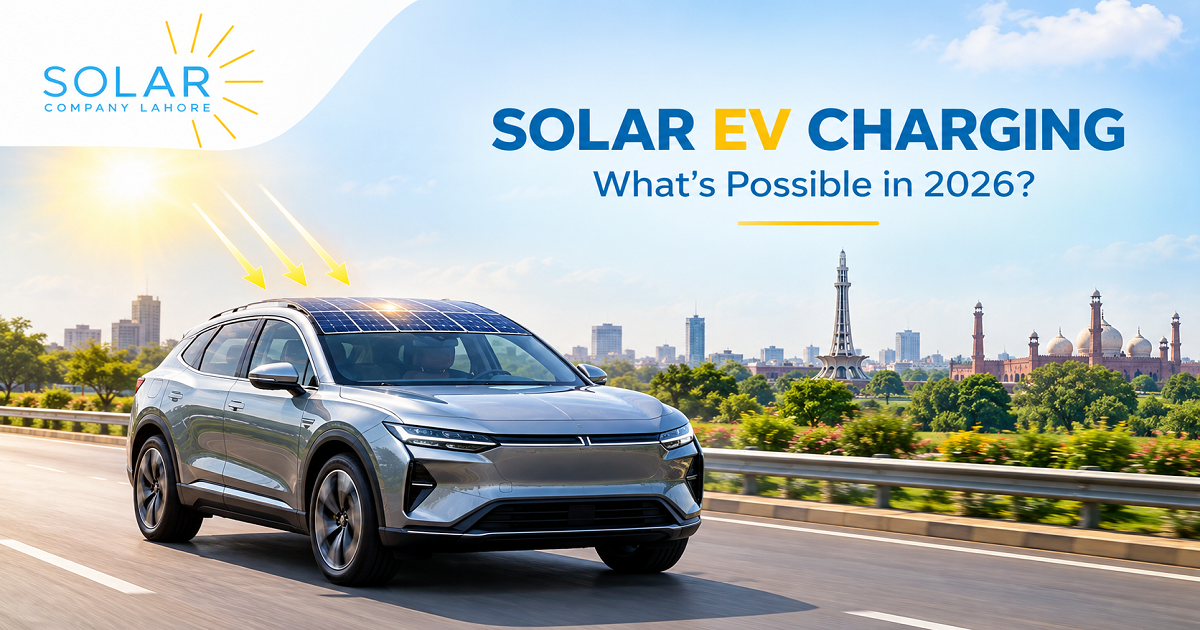
Recent developments in portable solar panels, lightweight photovoltaic materials, vehicle-integrated solar systems, and battery storage are creating new possibilities for electric vehicle charging. Instead of relying entirely on electricity from the grid or conventional charging stations, some vehicles and charging systems can use sunlight to generate additional energy.
The idea of charging a vehicle while it travels sounds exciting. However, it is important to understand what this technology can actually do. Solar panels fitted to a vehicle usually have limited surface area, and the amount of electricity they generate depends on sunlight, panel efficiency, weather conditions, and the vehicle’s energy consumption.
In 2026, the opportunity is not simply about replacing every charging station with solar panels. It is about finding practical ways to combine solar energy, battery storage, and conventional charging to make electric transportation more convenient and potentially more affordable.
For Lahore, Pakistan, where sunlight is available throughout much of the year, these developments deserve attention. They may also create opportunities for homeowners and businesses to combine rooftop solar installations with electric vehicle charging.
1. Why Solar Panel Technology Is Changing EV Charging in 2026
Traditional electric vehicle charging depends on electricity supplied through a charging station, home charger, or another compatible power source. Solar-powered charging introduces another option by generating electricity directly from sunlight.
The main development is the integration of solar cells with vehicle bodies and the use of improved electronics to transfer the generated energy into a battery. Researchers are also exploring more efficient photovoltaic materials and smarter charging controls.
According to a 2026 review of vehicle-integrated photovoltaics, this technology can generate useful electricity, but its performance depends on the vehicle design, sunlight exposure, shading, and driving conditions. It is best viewed as a supplementary energy source rather than a complete replacement for regular EV charging.

Several developments are helping advance this field:
-
Lightweight solar panels: These can reduce the additional weight associated with solar installations on vehicles.
-
Flexible photovoltaic materials: These may be adapted to curved vehicle surfaces when designed for automotive use.
-
Improved power electronics: These help manage variable solar output and transfer electricity efficiently.
-
Smart battery management: This helps coordinate solar generation, battery charging, and energy consumption.
-
Portable solar charging systems: These can collect sunlight while stationary and store the resulting electricity for later use.
Together, these improvements could make solar-assisted transportation more practical in suitable conditions.
2. How New Solar Panels Could Charge Electric Vehicles on the Go

Solar panels generate electricity through the photovoltaic effect. When sunlight reaches solar cells, the cells convert part of that energy into electrical power.
For an electric vehicle, the process involves several connected components.
Step 1: Solar panels collect sunlight
Solar cells can be installed on suitable vehicle surfaces, such as the roof or bonnet. The available surface area determines how many cells can fit on the vehicle.
A larger surface area can collect more sunlight, although vehicle design, safety, weight, and aerodynamics limit how much panel area is practical.
Step 2: The panels generate electricity
The photovoltaic cells produce direct-current (DC) electricity. Their output changes with sunlight intensity, panel temperature, shadows, and the angle at which sunlight reaches the cells.
A vehicle parked in an open area may collect more solar energy than one parked between tall buildings.
Step 3: Power electronics regulate the output
Solar electricity does not always match the voltage and current required by the vehicle battery. Power converters and suitable charge-control systems help regulate the energy and manage changes in solar output.
For a vehicle-integrated system, the electrical equipment must be compatible with the vehicle’s battery architecture and safety requirements.
Step 4: Electricity supports charging or vehicle systems
Depending on the design, solar electricity may support low-voltage electrical systems or be transferred to the main traction battery through an appropriate charging arrangement.
This distinction matters. A panel that powers ventilation or auxiliary electronics does not necessarily charge the main battery that drives the wheels.
Step 5: The battery stores usable energy
The battery can store energy generated by the solar panels, allowing the vehicle to use it later. A properly engineered system manages charging limits and protects the battery.
This process means solar energy can be collected while a vehicle is parked and, in suitable systems, while it is moving. However, the actual amount of useful energy depends on the system’s design and operating conditions.
3. Can an Electric Vehicle Really Charge While Driving?
Yes, some vehicle-integrated solar systems can generate electricity during driving. However, that does not mean an ordinary electric car can run indefinitely or charge its battery faster than it consumes energy.
A moving vehicle experiences changing sunlight conditions. Buildings, trees, bridges, other vehicles, and the vehicle’s own body can create shadows. The panels also have limited space compared with a large rooftop solar installation.
Research published in 2025 reported road testing of a plug-in hybrid equipped with high-efficiency solar cells. The test vehicle used solar modules rated at approximately 860 watts. This demonstrates that vehicle-mounted solar generation can contribute useful energy under real-world conditions, but the results cannot automatically be applied to every EV or solar panel system.
The practical outcome depends on three key factors:
-
Energy generation: How much electricity can the solar system produce?
-
Energy consumption: How much electricity does the vehicle use per kilometre?
-
Energy availability: How much of the generated electricity can the vehicle actually store and use?
If solar generation exceeds the vehicle’s immediate auxiliary demand, a compatible system may direct the surplus towards the battery. If the vehicle consumes energy faster than the panels generate it, the battery will continue to supply the difference.
Therefore, the realistic goal is to supplement charging, extend usable range in favourable conditions, and potentially reduce the frequency of visits to charging stations.
4. Why Lahore, Pakistan, Could Benefit from Solar EV Charging
Lahore receives substantial sunlight during much of the year, making solar energy a relevant option for residential and commercial electricity use. This creates an opportunity to explore solar charging alongside the growing interest in electric mobility.
For many local households, installing solar panels on a suitable rooftop may be more practical than relying only on small panels mounted on a car.
A rooftop system can generally accommodate a larger solar array than a passenger vehicle. It can generate electricity during the day and supply a compatible EV charger, subject to the system’s capacity, energy demand, and electrical design.
For homeowners in Lahore, this arrangement could offer several advantages:
-
Generate electricity from sunlight at home.
-
Use some of the solar generation to charge an EV during daylight hours.
-
Reduce reliance on grid electricity for the portion of charging supplied by solar.
-
Potentially coordinate vehicle charging with household energy use.
-
Add battery storage if backup power or evening charging is a priority.
However, savings are not guaranteed. They depend on the initial installation cost, vehicle efficiency, charging schedule, electricity tariff, solar generation, and any applicable connection or charging requirements.
Businesses may also consider solar-assisted charging for vehicles that remain parked for long periods, including office cars, delivery vehicles, and fleet vehicles. A properly designed stationary solar system may provide a more predictable energy source than a small array mounted on a moving car.
For local readers, solarcompanylahore.com can serve as a starting point for exploring solar energy options for homes and businesses, including the potential integration of solar generation with EV charging.
5. Top 10 Tips for Understanding Solar EV Charging in 2026
The following tips can help EV owners, homeowners, and businesses decide whether solar-assisted charging is suitable for their needs.
Tip 1: Choose a system that matches your vehicle
Not every solar panel or portable charging product is compatible with every electric vehicle. Check the vehicle’s charging requirements, connector type, voltage limits, and manufacturer recommendations before purchasing equipment.
Avoid assuming that any solar panel can be connected directly to an EV battery. A suitable charging system and compatible electronics are essential.
Tip 2: Compare vehicle-mounted and rooftop solar
Vehicle-mounted solar panels collect energy directly on the car, but their available surface area is limited.
Rooftop solar panels can often generate substantially more electricity because a home or commercial building has more space for installation. For drivers who charge at home, rooftop solar may be the more practical starting point.
Tip 3: Check real-world solar output
Do not base your decision entirely on a panel’s maximum rated wattage. Actual production varies according to sunlight, temperature, shading, orientation, and system losses.
Ask for realistic performance estimates that reflect Lahore’s weather, your parking arrangements, and the amount of time your vehicle spends outdoors.
Tip 4: Understand the difference between charging and range extension
A solar panel can generate electricity without fully charging an EV.
For example, solar generation might provide some of the energy required for a daily commute, but the vehicle may still need regular charging. The benefit is the electricity contributed by the solar system, not necessarily complete independence from the grid.
Tip 5: Consider battery storage where necessary
Battery storage can preserve solar electricity generated during the day for later use. This may help households that return home in the evening or businesses that operate outside daylight hours.
However, storage adds cost and energy losses. Compare the additional expense with your actual charging needs before deciding whether a battery is worthwhile.
Tip 6: Avoid unsafe DIY modifications
High-voltage EV batteries require specialised electrical protection and compatible charging equipment. Improper wiring or unsuitable converters can create serious risks.
Use qualified professionals for fixed electrical installations and follow the vehicle manufacturer’s requirements. Do not modify the traction battery or charging circuit without appropriate engineering approval.
Tip 7: Check the effect of heat and shading
Lahore’s summer conditions can expose panels and vehicles to high temperatures. Solar panels may become less efficient as their temperature rises, while partial shading can reduce output.
Choose equipment designed for its intended environment, maintain appropriate ventilation where required, and park in locations that balance solar exposure with vehicle protection.
Tip 8: Calculate your expected savings
Before investing, estimate your daily driving distance and electricity consumption.
For example, if an EV uses 15 kWh per 100 kilometres, a 30-kilometre journey requires approximately 4.5 kWh of energy before accounting for charging losses. A solar system must generate enough usable electricity to offset some or all of that requirement.
Compare the value of the electricity you expect to generate with the full cost of the panels, converters, installation, maintenance, and any battery storage.
Tip 9: Review warranties and durability
Vehicle-mounted solar equipment must withstand vibration, weather, temperature changes, and possible impacts. Poorly fitted panels may also affect aerodynamics, vehicle safety, or the manufacturer’s warranty.
Ask about product durability, electrical protection, installation standards, repair arrangements, and warranty conditions before making a purchase.
Tip 10: Start with a practical energy plan
Consider when you drive, where you park, and whether home charging is available. These factors may matter more than the headline efficiency figure of a solar panel.
For many Lahore residents, a grid-connected rooftop solar system with a compatible EV charger may offer a more useful balance between cost, energy production, and convenience than attempting to power the entire vehicle using body-mounted panels.
6. What Are the Main Benefits of Solar-Powered EV Charging?

Solar-assisted charging offers several potential benefits when the system is properly designed.
Lower dependence on grid electricity: Solar generation can supply part of an EV’s energy requirements, reducing the amount of electricity that must be purchased from the grid.
Potential operating-cost savings: When solar electricity replaces more expensive purchased electricity, charging costs may decrease. Actual savings depend on the installation cost, electricity tariffs, and the proportion of charging supplied by solar.
More flexible energy use: A combination of solar panels, storage, and intelligent charging controls can help users manage when and how electricity is used.
Support for renewable energy: Solar generation can reduce reliance on electricity produced from fossil fuels, although the overall environmental benefit depends on the energy sources and materials involved throughout the system’s life cycle.
Possible benefits for parked vehicles: Depending on the design, solar generation may support auxiliary systems or provide a small amount of battery charging while the vehicle is parked.
These advantages make solar charging worth considering, but they should be assessed against the system’s real performance and total cost.
7. What Are the Limitations of Charging an EV with Solar Panels?
Solar-powered EV charging is promising, but several limitations remain.
Limited panel area
A passenger car cannot usually accommodate the same amount of solar capacity as a home rooftop. Even efficient solar cells may generate insufficient electricity to meet the full energy needs of a vehicle driven long distances every day.
Variable sunlight
Cloud cover, dust, shadows, parking locations, and seasonal changes affect solar output. Drivers cannot assume that a vehicle will receive enough sunlight throughout every journey.
Additional costs
Specialised panels, power converters, control equipment, wiring, and battery integration can increase system costs. The financial benefit depends on how much useful electricity the installation generates over its lifetime.
Engineering and safety requirements
Vehicle-integrated solar systems must account for weight, weather resistance, aerodynamics, vibration, electrical safety, and compatibility with the vehicle’s battery.
The US Department of Energy has also identified challenges involving durability, curved panel surfaces, changing sunlight conditions, and integration with vehicle electrical systems.
No guarantee of fast charging
Vehicle-mounted solar panels generally cannot replace high-power charging stations for drivers who need to recharge quickly. Their main value is contributing additional energy, rather than delivering the same charging speed as a dedicated high-power charger.
For these reasons, solar charging should currently be considered part of a broader EV energy strategy rather than a universal replacement for conventional charging.
8. How to Plan a Solar EV Charging System for Your Home in Lahore
Before installing a solar charging solution, homeowners should review their electricity consumption and daily vehicle usage.
Start by identifying how many kilometres the vehicle travels on an average day. Then check its energy consumption per kilometre and calculate the approximate electricity required for charging.
Next, review your existing rooftop solar system, if you have one. Determine whether it has enough spare generation capacity to support EV charging alongside household appliances such as air conditioners, refrigerators, lights, and water pumps.
If you do not already have solar panels, request a system assessment based on your expected household and vehicle energy requirements.
A practical installation plan should consider:
-
Rooftop space and sunlight exposure.
-
Solar panel capacity and expected daily generation.
-
EV charger compatibility and electrical protection.
-
Daytime versus nighttime charging requirements.
-
Battery storage requirements, if any.
-
Installation costs, maintenance, and expected savings.
Homeowners should also check applicable electricity connection requirements and relevant local regulations before proceeding.
For households considering solar energy for both their homes and electric vehicles, solarcompanylahore.com can be a useful starting point for discussing residential solar requirements and evaluating suitable system configurations.
9. What Does the Future Hold for Solar EV Charging in 2026 and Beyond?
The future of solar-assisted transportation will depend on more than improvements in solar cell efficiency. Vehicle design, battery technology, charging electronics, manufacturing costs, and energy management will all influence how widely the technology is adopted.
Research is exploring more effective ways to integrate solar cells into vehicle roofs and body panels. Improved power converters may also help vehicles make better use of electricity generated under changing sunlight conditions.
Another important development is the coordination of stationary solar systems with electric vehicle charging. Smart charging controls can help direct available solar electricity towards a vehicle when generation is high and reduce unnecessary grid consumption.
For Pakistan, the opportunity may extend beyond private passenger cars. Commercial fleets, delivery vehicles, workplace parking facilities, and residential charging installations could all benefit from appropriately designed solar energy systems.
However, widespread adoption will require affordable equipment, reliable installation practices, suitable vehicle compatibility, and transparent performance information.
The most useful advances will be those that deliver measurable benefits under everyday driving and parking conditions, rather than relying solely on laboratory results or optimistic performance estimates.
10. Why Solar Energy Matters for the Future of Electric Mobility
Electric vehicles and solar energy can complement each other. EVs provide an alternative to petrol- and diesel-powered transportation, while solar panels offer a way to generate electricity without burning fuel during operation.
Combining these technologies can make transport more closely connected to renewable electricity generation. The most suitable arrangement will differ from one household or business to another.
For some drivers, vehicle-mounted solar panels may provide a useful supplementary energy source. For others, rooftop solar combined with a compatible home charger may be the more effective choice.
Understanding solar panel technology for electric vehicles helps consumers distinguish between genuine engineering progress and exaggerated claims. It also encourages better decisions about charging equipment, installation costs, energy savings, and long-term performance.
For Lahore’s homeowners and businesses, the priority should be to choose solutions based on actual electricity requirements, available sunlight, reliable equipment, and professional installation.
At solarcompanylahore.com, the broader goal is to help customers understand practical solar energy options and make informed decisions about using renewable electricity in their homes and businesses.
As solar technology continues to develop in 2026, combining realistic expectations with careful system planning will be essential to making electric mobility more convenient and energy-efficient.
Frequently Asked Questions (FAQs)
1. Can solar panels charge an electric vehicle while it is moving?
Yes. Some vehicles with integrated solar panels can generate electricity while driving. However, the energy produced is usually supplementary, and the amount depends on sunlight, panel area, efficiency, shading, and vehicle energy consumption.
2. Can solar panels fully charge an EV without using grid electricity?
It is possible in certain circumstances when a suitable solar installation generates enough energy and has appropriate charging equipment or storage. However, small vehicle-mounted panels generally cannot provide all the energy required by every EV, particularly for long-distance driving.
3. Is solar EV charging practical in Lahore, Pakistan?
It can be practical, especially when a home or business has adequate rooftop space and suitable sunlight exposure. A rooftop solar system paired with a compatible EV charger may be more effective for regular charging than relying only on panels installed on a car.
4. Do solar panels increase an electric vehicle’s driving range?
They can provide additional energy that may extend the distance travelled between conventional charging sessions. The amount of extra range depends on usable solar generation and the vehicle’s electricity consumption.
5. What is the difference between vehicle-mounted solar panels and rooftop solar panels?
Vehicle-mounted panels collect energy from the surfaces of a car, where available space is limited. Rooftop panels can generally use a much larger area and may therefore generate more electricity for home charging.
6. Does hot weather improve solar panel performance?
Strong sunlight can increase electricity generation, but excessive panel temperature can reduce efficiency. The actual output depends on sunlight intensity, panel temperature, ventilation, shading, and the panel’s specifications.
7. Is a battery necessary for solar EV charging?
Not always. A compatible solar system may supply electricity directly to a vehicle charger when sufficient generation is available. Battery storage can help make solar energy available later, but it adds cost and conversion losses.
8. How can I estimate the cost savings from solar EV charging?
Estimate your vehicle’s electricity consumption, the amount of solar energy available for charging, and your applicable electricity tariff. Then compare the expected savings with the cost of equipment, installation, maintenance, and storage.
9. Is solar charging better than using a conventional EV charging station?
The two options serve different purposes. Solar charging can reduce reliance on purchased electricity, while conventional charging stations provide a practical way to replenish the battery when required. Combining both can offer greater flexibility.
10. What should I check before buying a solar EV charging system?
Check vehicle compatibility, panel output, charging equipment, electrical safety, warranties, installation quality, and realistic energy-generation estimates. Avoid products that promise unlimited driving or complete charging without reliable performance evidence.
11. Can I use my existing home solar system to charge an electric vehicle?
Potentially, yes. Your solar system must have suitable available capacity, compatible charging equipment, and appropriate electrical protection. An installer should assess household consumption and vehicle charging requirements before recommending modifications.
12. What is the future of solar panel technology for electric vehicles in 2026?
The technology is progressing through improvements in solar cell integration, lightweight materials, power electronics, and energy management. These developments may increase the useful contribution of solar power, but vehicle-mounted panels are still best viewed as a supplementary charging solution in most cases.