
Introduction
Solar energy has become one of the fastest-growing energy solutions in Pakistan. Rising electricity prices, frequent changes in energy policies, and the falling cost of solar panels have encouraged thousands of households and businesses to install solar systems.
Lahore has been one of the major centres of this solar revolution. Residential consumers, factories, commercial buildings, schools, hospitals, and small businesses have increasingly invested in solar power to reduce their dependence on expensive grid electricity.
However, a new challenge has created concern among solar consumers.
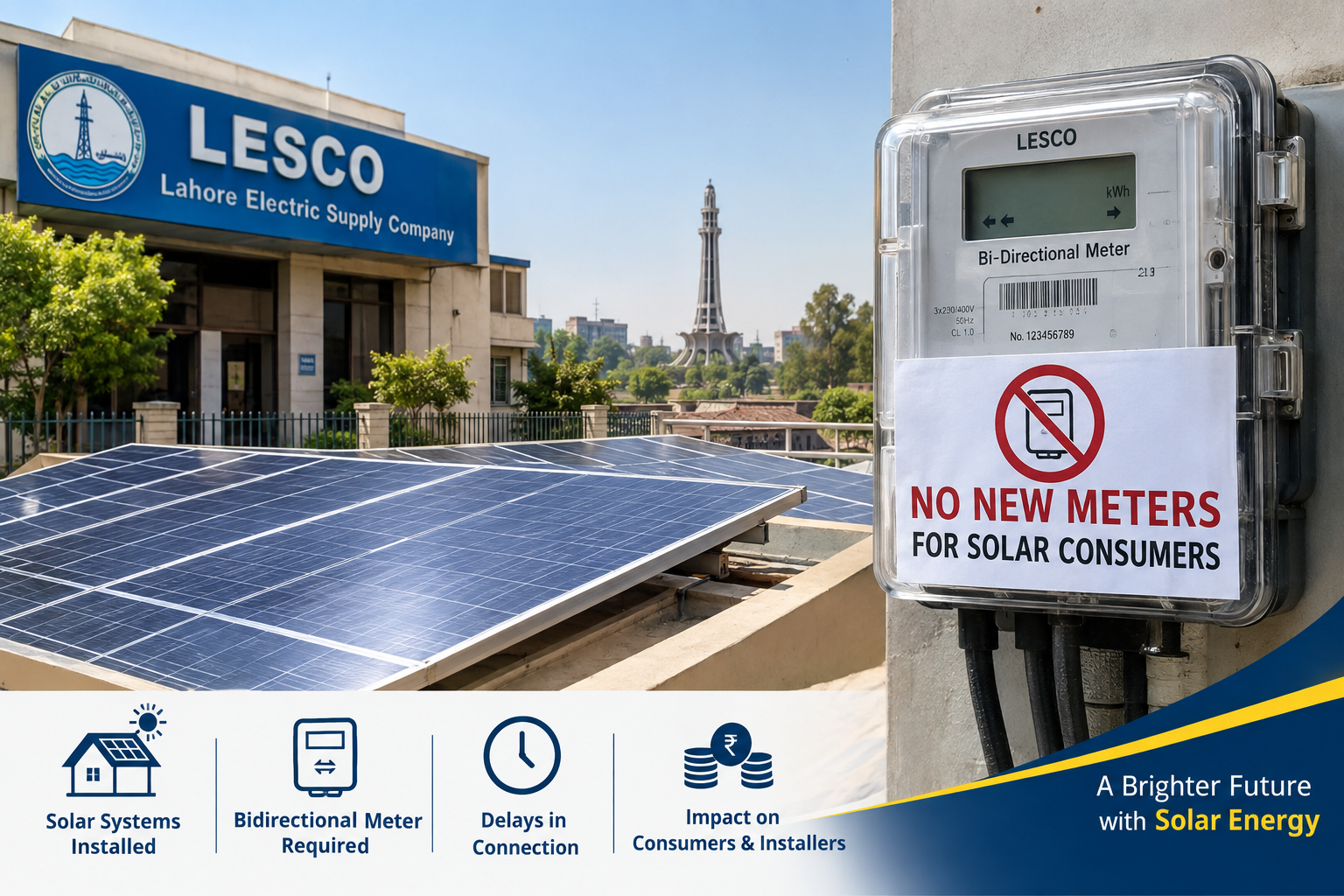
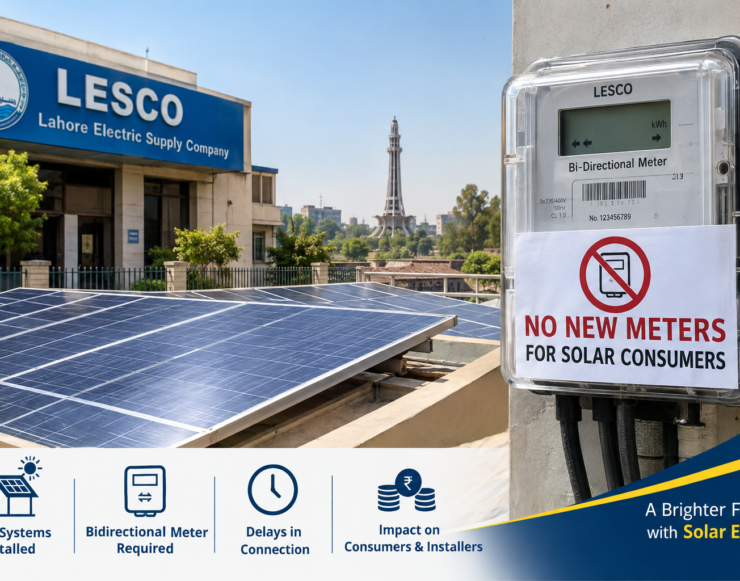
Reports published on September 8, 2026, indicate that the Lahore Electric Supply Company (LESCO) has stopped issuing new bidirectional or green meters to solar consumers because of a shortage of available meters. The shortage has reportedly affected consumers who have already completed major parts of the solar connection process, including installing their systems and submitting demand notices.
This development is particularly important for people in Lahore and other areas served by LESCO who are planning to install grid-connected solar systems.
For many consumers, the solar system itself is already installed. Their investment has been made, equipment has been purchased, and the installation is complete. However, without a bidirectional meter, the final connection process may remain delayed.
This article explains the situation in simple language, its possible impact on solar consumers, and what homeowners and businesses in Lahore should understand before making new solar investments.
What Has Happened With LESCO Solar Meters?
According to recent reports, LESCO has reportedly stopped issuing new bidirectional green meters because of limited meter availability.
Bidirectional meters are essential for solar consumers who want their solar systems connected properly with the electricity grid. These meters measure electricity flowing in two directions:
- Electricity consumed from the national grid.
- Electricity exported from the consumer’s solar system to the grid.
Reports suggest that the shortage has affected both new meter installations and the replacement of faulty bidirectional meters. Consumers who had already submitted demand notices and completed required procedures may now face additional waiting time.
The issue has created frustration because many consumers have already invested significant amounts of money in solar systems.
Why Are Bidirectional Green Meters Important?
A bidirectional meter is one of the most important components of a grid-connected solar system.
Many people focus mainly on solar panels, inverters, batteries, and mounting structures. However, for consumers who want an official grid-connected solar arrangement, the meter is equally important.
A bidirectional meter records both imported and exported electricity.
For example:
| Electricity Flow | Meter Records |
|---|---|
| Electricity used from LESCO grid | Import |
| Extra electricity sent from solar system | Export |
| Solar electricity used directly in the home | Normally consumed behind the meter |
This information allows the electricity distribution system to calculate the consumer’s electricity usage and exported solar energy according to the applicable policy.
Without the required bidirectional meter, consumers may not be able to receive the full intended benefit of their grid-connected solar investment.
How Does This Affect Solar Consumers in Lahore?
The impact can be significant, especially for consumers who have already completed their solar installation.
1. Delayed Return on Investment
A solar system is a financial investment.
People install solar systems to reduce electricity bills and recover their investment over time. If the connection process is delayed, consumers may not receive the expected benefits according to their planned solar configuration.
For example, a consumer may have installed:
- 10kW solar system
- Hybrid inverter
- Solar panels
- Protection equipment
- Solar structure
- AC and DC cables
The system may be physically ready, but the official grid connection process may remain incomplete until the required meter becomes available.
This can delay the expected financial return.
2. Consumers May Have Already Paid Demand Notices
Reports indicate that some consumers had already received and deposited demand notices for their solar connections before the current meter shortage became a major issue.
This creates understandable frustration.
From the consumer’s perspective, the process may appear complete:
- Solar system installed.
- Required documents submitted.
- Demand notice received.
- Payment deposited.
- Online process completed.
But the final meter installation may still be delayed because of equipment availability.
This situation can create uncertainty for consumers who are waiting for commissioning.
3. Solar Installers May Face Customer Pressure
The issue does not affect consumers alone.
Solar installation companies in Lahore may also face difficulties.
A typical customer may not fully understand the difference between:
- Solar system installation.
- NEPRA or policy requirements.
- LESCO approval procedures.
- Demand notice processing.
- Meter allocation.
- Physical meter installation.
The customer may blame the solar company for the delay, even when the system installation has been completed successfully.
This can create reputational pressure on solar companies.
For solar installers, clear communication has become more important than ever.
Companies should explain to customers before installation that government approvals, distribution company procedures, and meter availability are outside the direct control of the solar installer.
The Difference Between Solar Installation and Grid Approval
Many new solar consumers believe that installing solar panels automatically means they are ready to export electricity to the grid.
This is not always correct.
There are multiple stages involved.
Stage 1: Solar System Design
The solar company calculates:
- Electricity consumption.
- Available roof space.
- Required system capacity.
- Solar panel quantity.
- Inverter size.
- Battery requirement, if applicable.
Stage 2: Installation
The physical installation includes:
- Solar panels.
- Solar inverter.
- Mounting structure.
- DC cables.
- AC cables.
- Breakers.
- Earthing system.
- Surge protection.
Stage 3: Documentation and Application
The consumer must complete the required official application and documentation process according to the applicable regulations.
Stage 4: Inspection and Approval
Relevant authorities may inspect or process the installation and documentation.
Stage 5: Meter Installation
The bidirectional meter is installed or replaced according to the approved procedure.
Stage 6: System Commissioning
After the required approvals and meter installation, the solar system can operate according to the applicable grid connection arrangement.
The current shortage is affecting one of the final but very important stages of this process.
Why Is There a Shortage of Green Meters?
The exact operational and procurement reasons for the current shortage have not been fully explained publicly in the reports available so far.
However, recent reporting consistently points to limited stock of bidirectional meters as the immediate reason for delays in new installations.
Pakistan’s solar market has grown rapidly over the last several years.
Several factors have contributed to this growth:
- High electricity tariffs.
- Increasing fuel costs.
- Falling solar panel prices.
- Availability of Chinese solar products.
- Growing awareness of renewable energy.
- Increased availability of hybrid inverters.
- Interest from commercial and industrial consumers.
When the number of solar installations increases rapidly, the infrastructure supporting these systems must also expand.
This includes:
- Meter availability.
- Technical staff.
- Inspection capacity.
- Application processing.
- Grid infrastructure.
- Digital monitoring systems.
If any one part of this system fails to keep up with demand, delays can occur.
Previous Challenges Faced by Solar Consumers in 2026
The latest meter shortage is not the first difficulty faced by solar consumers in the LESCO region during 2026.
Earlier in January 2026, reports indicated that LESCO had temporarily suspended the installation of solar green meters following directives connected with changes in solar policy. The suspension reportedly affected residential and industrial consumers.
In March 2026, reports also highlighted delays in implementing pending net-metering connections for consumers who had completed required procedures.
These developments show that solar consumers in Pakistan must consider more than just the cost of equipment.
Policy and administrative processes can also affect project timelines.
What Is the Difference Between Net Metering and Net Billing?
This is an important issue for new solar consumers in Pakistan.
Solar policies and billing mechanisms have been changing, and consumers should understand the applicable arrangement before investing.
In simple terms, solar consumers need to understand:
- How electricity imported from the grid is charged.
- How exported solar electricity is credited or purchased.
- Which policy applies to their connection.
- What happens when an existing agreement expires or changes.
The difference between net metering and net billing can significantly affect the financial calculations of a solar project.
Therefore, consumers should not depend only on marketing claims such as:
“Your electricity bill will become zero.”
This statement may not always be accurate.
Actual savings depend on:
- System size.
- Electricity consumption.
- Daytime usage.
- Export rules.
- Applicable tariff.
- Billing policy.
- Battery usage.
- Seasonal solar production.
Consumers should always request a realistic financial analysis before purchasing a solar system.
Can You Still Install a Solar System Without a Green Meter?
Yes, depending on the type of solar system.
A consumer can install a solar system for self-consumption.
For example, a hybrid solar system can power daytime loads directly from solar energy.
This may include:
- Air conditioners.
- Fans.
- Lights.
- Refrigerators.
- Water pumps.
- Office equipment.
- Industrial machinery.
However, the ability to export electricity to the grid legally and receive the applicable credit or compensation depends on the official connection arrangement and required approvals.
Consumers should never attempt to bypass the official metering process.
Incorrect or unauthorized electrical connections can create:
- Safety risks.
- Equipment damage.
- Billing disputes.
- Legal problems.
- Warranty issues.
Always follow approved electrical and grid connection procedures.
What Should Lahore Consumers Do Before Installing Solar Now?
The current situation does not mean solar energy has become a bad investment.
Solar can still provide significant benefits.
However, consumers should make better planning decisions.
1. Ask About the Meter Situation Before Purchasing
Before signing a solar installation contract, ask the company:
- What is the current LESCO meter availability?
- How long is the estimated approval process?
- Is the meter included in the project process?
- Who handles the documentation?
- What happens if meter installation is delayed?
A professional solar company should explain these matters honestly.
2. Focus on Self-Consumption
The best solar economics often come from consuming solar electricity directly during the daytime.
For example:
- Run air conditioners during sunlight hours.
- Operate water pumps during the day.
- Use washing machines during solar production.
- Shift commercial loads to daytime.
- Charge batteries during peak sunlight hours.
The more solar electricity you consume directly, the less you depend on exporting surplus energy.
3. Choose the Right System Size
Do not install an oversized system simply because solar panels are cheaper.
A proper solar system should be designed according to:
- Monthly electricity consumption.
- Daytime load.
- Night-time load.
- Roof space.
- Future electricity requirements.
- Applicable solar policy.
Oversizing without proper planning may increase investment costs unnecessarily.
4. Keep All Documents Safe
Consumers should maintain copies of:
- Application documents.
- Demand notices.
- Payment receipts.
- Solar system invoices.
- Inverter serial numbers.
- Solar panel serial numbers.
- Approval documents.
- Inspection reports.
These documents can be important if there is a delay or billing dispute.
Impact on Lahore’s Solar Industry
Lahore has become one of Pakistan’s largest markets for residential and commercial solar systems.
Areas with significant solar activity include:
- DHA Lahore.
- Bahria Town Lahore.
- WAPDA Town.
- Johar Town.
- Model Town.
- Gulberg.
- Valencia.
- Faisal Town.
- Raiwind Road.
- Industrial areas around Lahore.
A prolonged shortage of bidirectional meters could affect the industry in several ways.
Slower Customer Decisions
Some customers may delay purchasing solar systems until the meter situation becomes clearer.
Increased Customer Confusion
Different customers may receive different information from installers, electricians, and government offices.
This makes transparent communication essential.
Pressure on Solar Companies
Customers may expect installers to solve problems related to government approvals and meter availability.
Professional companies should clearly define their responsibilities in the project agreement.
Growth of Hybrid and Battery-Based Systems
Consumers may increasingly consider battery storage and hybrid solar systems.
Instead of depending heavily on electricity export, consumers may focus more on:
- Daytime self-consumption.
- Battery charging.
- Backup power.
- Load management.
This could change the way solar systems are designed in Pakistan.
The Importance of Battery Storage in Pakistan’s Solar Future
Pakistan’s solar market is gradually moving toward a more advanced energy model.
Previously, many consumers focused mainly on:
Install solar panels and export extra electricity.
Now the market is changing.
Consumers are becoming more interested in:
- Lithium batteries.
- Hybrid inverters.
- Energy storage.
- Smart load management.
- Time-based electricity usage.
Battery storage can help consumers use more of their own solar electricity.
For example:
During the day:
Solar panels generate electricity.
Extra electricity can charge batteries.
During the evening:
The battery can power selected loads.
This can reduce dependence on the grid.
However, batteries also increase the initial project cost.
Therefore, consumers should perform a financial comparison before selecting a battery system.
What Should Solar Companies in Lahore Do?
Solar companies should use the current situation as an opportunity to improve transparency and customer education.
A professional solar company should not promise unrealistic timelines.
Instead, it should explain the complete process.
Recommended Approach
Provide a Written Project Scope
Clearly mention:
- Equipment specifications.
- Installation responsibilities.
- Documentation support.
- Estimated timeline.
- Government approval dependency.
Avoid False Promises
Do not guarantee:
- Exact LESCO approval dates.
- Exact meter installation dates.
- Zero electricity bills.
These factors may depend on external conditions.
Design Systems for Maximum Self-Consumption
Focus on helping customers use solar electricity efficiently.
Educate Customers About Policy Changes
The Pakistani solar market is evolving.
Customers should understand that regulations and billing structures can change.
Is Solar Still Worth It in Lahore?
In many cases, yes.
Solar remains an attractive energy solution because grid electricity costs remain a major concern for households and businesses.
However, the solar investment model is changing.
The best future solar projects may focus less on exporting large amounts of electricity and more on:
- Reducing daytime grid consumption.
- Using efficient appliances.
- Managing energy loads.
- Adding battery storage where financially suitable.
- Designing correctly sized systems.
A properly designed solar system can still reduce electricity costs significantly.
The key is proper planning.
Advice for Consumers Who Have Already Installed Solar Systems
If you have already installed a solar system and are waiting for a bidirectional meter, consider the following steps.
Stay in Contact With the Relevant LESCO Office
Follow up professionally and maintain records of your application.
Keep Payment Proof
Maintain copies of demand notice payments and other official documents.
Avoid Unauthorized Electrical Modifications
Do not attempt to modify the meter or grid connection yourself.
Speak With Your Solar Installer
Ask your installer about safe system operation while waiting for official meter processing.
Use Solar Energy for Daytime Loads
If your system configuration allows safe and approved self-consumption, maximize daytime electricity usage.
The Bigger Issue: Pakistan Needs Better Solar Infrastructure
The current situation highlights an important issue.
Pakistan is experiencing rapid growth in solar adoption.
However, solar panels alone are not enough.
The entire energy ecosystem must develop.
Pakistan needs improvement in:
- Distribution networks.
- Smart meters.
- Bidirectional meter availability.
- Digital approval systems.
- Technical training.
- Consumer awareness.
- Energy storage infrastructure.
Solar energy can play a major role in Pakistan’s energy future, but the supporting infrastructure must grow at the same speed.
If thousands of consumers install solar systems but cannot receive timely connections, confidence in the system may decrease.
Efficient planning and procurement are essential.
What Does This Mean for the Future of Solar Energy in Lahore?
The short-term situation may create delays, but the long-term demand for solar energy in Lahore is unlikely to disappear.
Electricity consumers continue to look for ways to reduce their monthly energy expenses.
Businesses also need predictable energy costs.
Solar energy offers several long-term advantages:
- Reduced daytime electricity dependence.
- Lower operating costs.
- Renewable energy generation.
- Protection against rising electricity prices.
- Energy independence when combined with batteries.
However, the market is becoming more complex.
Consumers must now consider:
- Solar panel technology.
- Inverter quality.
- Battery requirements.
- Electricity consumption patterns.
- Government policies.
- LESCO connection procedures.
- Meter availability.
- Future electricity tariffs.
Choosing the cheapest solar package is no longer enough.
Consumers need professional energy planning.
 Frequently Asked Questions (FAQs)
1. Why has LESCO stopped issuing new solar meters?
According to recent reports, LESCO has reportedly faced a shortage of bidirectional green meters, which has affected the issuance of new meters and delayed pending solar connections.
2. What is a bidirectional meter?
A bidirectional meter records electricity moving in two directions: electricity consumed from the grid and electricity exported from a solar system.
3. Can I install solar panels without a green meter?
Yes, you can install a solar system for self-consumption depending on the system design. However, exporting electricity to the grid requires compliance with the applicable official connection and metering requirements.
4. Will my solar system work while waiting for a LESCO meter?
This depends on the type and configuration of your solar system. You should consult a qualified solar installer or electrician regarding safe operation.
5. Should I delay my solar installation because of the meter shortage?
Not necessarily. However, you should understand the current LESCO approval and meter situation before making a purchase decision.
6. Does the meter shortage affect existing solar consumers?
Reports indicate that the shortage has mainly affected new meter issuance and the replacement of faulty bidirectional meters. Existing consumers with properly functioning meters may not face the same issue.
7. Is solar still a good investment in Lahore?
For many consumers, yes. Solar can significantly reduce daytime electricity consumption and long-term energy costs when the system is correctly designed.
8. What should I ask a solar company before installation?
Ask about system size, equipment quality, estimated generation, documentation process, LESCO procedures, meter availability, applicable billing policy, and possible delays.
9. Can batteries reduce dependence on grid export?
Yes. A battery can store surplus solar electricity for later use, depending on the system configuration and battery capacity.
10. What is the best approach for new solar consumers in Lahore?
The best approach is to install a properly sized system based on actual electricity consumption, maximize daytime self-consumption, use quality equipment, and stay informed about current LESCO procedures and solar policies.