

Introduction
Punjab is moving towards a cleaner and more sustainable transportation system. With increasing electricity costs, growing urban populations, and rising demand for reliable public transport, renewable energy is becoming an important part of the province’s future development plans.
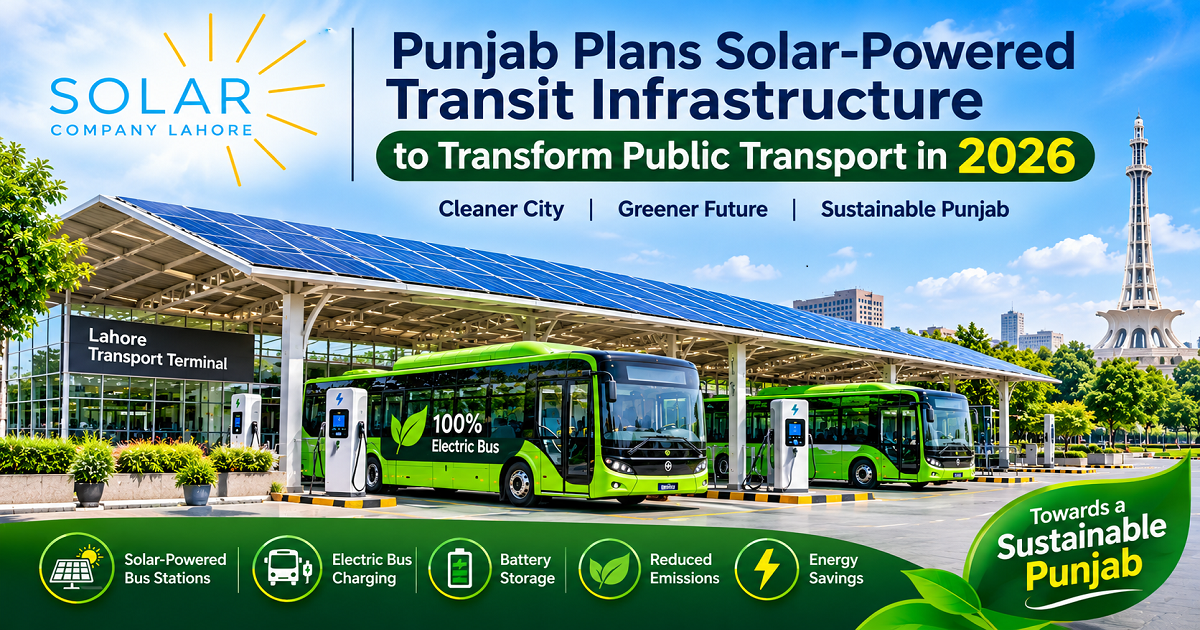
One of the most interesting developments in this direction is the plan to introduce solar-powered infrastructure across the public transportation network. This approach could help reduce dependence on conventional electricity, improve energy efficiency, and support the development of environmentally friendly transport facilities.
For a province with major urban centres such as Lahore, Rawalpindi, Faisalabad, Multan, and Gujranwala, sustainable transportation is becoming increasingly important. Public transport facilities consume electricity for lighting, ticketing systems, ventilation, security equipment, information displays, and other essential operations. Solar energy could provide a practical solution for meeting some of these electricity requirements.
The idea of combining renewable energy with public transportation is not limited to installing solar panels on rooftops. It can also involve battery storage, solar-powered lighting, electric vehicle charging facilities, and intelligent energy management systems.
For homeowners and businesses in Lahore, this development is also worth understanding. Government investment in solar infrastructure can increase public awareness of renewable energy and demonstrate how solar technology can support large-scale electricity requirements.
In this article, we will explore the potential benefits, technologies, challenges, and opportunities associated with Punjab’s solar-powered transportation vision in 2026.
Important context: This article discusses the potential applications and implications of the reported provincial plan. Specific project locations, budgets, installation capacities, and implementation schedules should be confirmed through official government announcements.
H2: What Is Punjab’s Solar-Powered Transit Infrastructure Plan?
Punjab’s proposed direction towards solar-powered transit infrastructure reflects an effort to integrate renewable energy into public transportation facilities.
Traditional transport infrastructure depends heavily on electricity supplied through the national grid. However, electricity expenses can become a significant operational cost, particularly for large transport terminals and facilities operating throughout the day.
Solar energy offers an alternative source of electricity that can support these facilities.
Under a solar-powered transit approach, public transport infrastructure could use solar photovoltaic panels to generate electricity during daylight hours. The generated electricity could then be consumed immediately or stored in batteries for later use.
Potential applications include:
-
Solar-powered bus terminals.
-
Solar rooftop installations at transport stations.
-
Solar streetlights and parking-area lighting.
-
Battery storage systems.
-
Electric bus charging facilities.
-
Solar-powered passenger information displays.
-
Energy-efficient ticketing and security systems.
The main objective is to develop a transportation network that uses energy more efficiently while reducing long-term dependence on conventional electricity.
It is important to understand that solar energy may support different parts of the transportation network without necessarily powering every vehicle directly.
H3: Why Is Punjab Moving Towards Solar-Powered Public Transportation in 2026?
There are several reasons why solar energy is becoming an important consideration for Punjab’s transportation sector.
H3: 1. Increasing Electricity Costs
Electricity expenses are a major concern for public facilities. Large bus terminals, stations, administrative offices, and transport depots require electricity for daily operations.
When these facilities depend entirely on grid electricity, rising energy costs can increase their operating expenses.
Solar panels can help reduce this financial pressure by generating electricity on-site. Once installed, a properly maintained solar system can produce electricity for many years.
This can help transport authorities manage their electricity budgets more effectively.
H3: 2. Growing Demand for Public Transportation
Punjab has a large population, and cities such as Lahore are experiencing continuous demand for better transportation facilities.
As public transport networks expand, electricity requirements are also likely to increase.
Solar-powered infrastructure can support this expansion by providing an additional source of electricity without placing the entire burden on the conventional grid.
H3: 3. Reducing Environmental Pollution
Air pollution is a serious concern in several urban areas of Punjab.
Conventional electricity generation and fuel-powered transportation contribute to environmental pollution. Solar energy generates electricity without producing direct emissions during normal operation.
Using renewable electricity in public transport facilities can therefore help reduce their operational carbon footprint.
When solar energy also supports electric buses, the environmental benefits can become greater, particularly when the electricity replaces power generated from fossil fuels.
H3: 4. Improving Energy Security
Dependence on a single electricity source can create operational difficulties when supply is interrupted.
Solar systems equipped with suitable battery storage can provide backup electricity for essential equipment.
For example, lighting, security cameras, communication systems, and important control equipment may continue operating during certain grid outages, depending on the system design and available battery capacity.
H3: 5. Supporting Pakistan’s Renewable Energy Transition
Pakistan has significant solar energy potential because of its geographical location and availability of sunlight.
Punjab can benefit from this natural resource by introducing renewable energy solutions in public buildings, commercial facilities, industrial areas, and transportation infrastructure.
Government-led solar projects can also encourage private businesses and homeowners to consider solar installations.
H4: How Solar Energy Can Transform Punjab’s Transit Infrastructure
Solar energy can support different parts of public transportation. Its applications are not restricted to rooftops or small electricity requirements.
A properly designed system can integrate several technologies to improve energy management.
H4: 1. Solar Panels on Bus Stations and Terminals
Bus stations and terminals often have large roof areas that can be used for solar panel installations.
These rooftops provide an opportunity to generate electricity without requiring additional land.
The electricity generated can support:
-
Indoor and outdoor lighting.
-
Passenger waiting areas.
-
Ticket counters.
-
Office equipment.
-
Security systems.
-
Ventilation and selected cooling equipment.
In Lahore, where summer temperatures can become extremely high, electricity for ventilation and cooling can be a major requirement at passenger facilities.
Solar rooftop systems could help meet some of this demand during daylight hours.
H4: 2. Solar-Powered Electric Bus Charging Stations
Electric buses are an important part of the future of sustainable public transportation.
However, electric buses require reliable charging facilities. If charging stations depend entirely on conventional grid electricity, operating costs and grid capacity can become important considerations.
Solar-powered charging facilities offer another possibility.
A suitable installation could combine:
-
Solar photovoltaic panels.
-
High-capacity inverters.
-
Battery energy storage.
-
Electric vehicle charging equipment.
-
Smart energy management systems.
Such arrangements could allow some electricity generated during the day to be used for charging electric buses.
However, large electric bus fleets require careful planning. Charging demand, battery capacity, operating schedules, and available electricity supply must all be considered before installation.
H4: 3. Battery Storage for Reliable Electricity
Solar panels generate electricity during daylight hours. However, public transportation facilities may require electricity at night and during periods of limited sunlight.
Battery storage can help solve this problem.
A battery energy storage system stores surplus electricity produced by solar panels and makes it available when required.
For example, stored electricity may support:
-
Emergency lighting.
-
Security equipment.
-
Communication systems.
-
Ticketing operations.
-
Selected station facilities.
-
Backup power for essential equipment.
The required battery capacity depends on electricity consumption, backup duration, and the importance of the connected equipment.
H4: 4. Solar Streetlights and Parking Facilities
Public transportation infrastructure includes roads, parking areas, bus stops, and passenger access points.
Solar streetlights can provide lighting in locations where conventional electrical connections are difficult or expensive.
These systems generally combine solar panels, rechargeable batteries, LED lights, and automatic controllers.
They can improve visibility and passenger safety while reducing electricity consumption.
H4: 5. Smart Energy Management Systems
Modern solar installations can use monitoring systems to track electricity generation and consumption.
These systems help operators understand how much electricity is being generated, how much is being consumed, and how much energy is stored in batteries.
Smart monitoring can identify equipment problems and help improve system performance.
For large transportation facilities, this information is particularly useful because energy consumption may vary throughout the day.
H5: What Benefits Can Lahore Gain from Solar-Powered Transit Infrastructure?
Lahore is one of Punjab’s largest urban centres. Its growing population and transportation requirements make energy-efficient public infrastructure increasingly important.
The introduction of solar technology in transport facilities could provide several benefits.
Lower Electricity Expenses
Transport stations and depots consume electricity every day.
Solar installations can reduce the amount of electricity purchased from the grid. The actual savings will depend on the system size, electricity consumption pattern, installation cost, and applicable electricity tariff.
For large facilities, even a partial reduction in grid consumption can make a meaningful difference over time.
Better Passenger Facilities
Reliable electricity is necessary for maintaining comfortable and functional passenger facilities.
Solar energy can support lighting, ventilation, information displays, and selected cooling equipment.
This can help improve the passenger experience, especially during Lahore’s hot summer months.
Support for Electric Public Transport
Electric buses require a dependable charging network.
Solar-powered charging infrastructure could help reduce the electricity demand placed on the grid and support the expansion of electric public transport.
However, charging facilities must be designed according to the number of buses, charging speed, and daily operating schedules.
A Cleaner Urban Environment
Replacing some conventional electricity consumption with solar generation can reduce associated greenhouse gas emissions.
If electric buses also replace diesel-powered vehicles, the combined impact could contribute to better urban air quality.
The overall environmental benefit will depend on how the projects are implemented and the energy sources they replace.
New Employment and Business Opportunities
Large solar infrastructure projects require skilled professionals for planning, installation, electrical work, monitoring, and maintenance.
This can create opportunities for:
-
Solar installation companies.
-
Electrical engineers and technicians.
-
Battery storage specialists.
-
Equipment suppliers.
-
Maintenance service providers.
-
Renewable energy consultants.
For Pakistan’s growing solar market, government investment in renewable energy could also encourage further development of local technical skills.
H5: Top 10 Technologies That Could Support Punjab’s Solar Transit Vision in 2026
Several technologies can work together to make solar-powered transportation facilities more efficient.
H5: 1. High-Efficiency Solar Panels
Modern photovoltaic panels convert sunlight into electricity. Their efficiency and output should be considered when selecting equipment for large rooftop installations.
H5: 2. Hybrid Solar Inverters
Hybrid inverters manage electricity from solar panels, batteries, and the grid. They can help balance different electricity sources according to system requirements.
H5: 3. Lithium Battery Storage
Battery systems store excess solar electricity for later use. Their capacity should be selected according to the facility’s backup and energy requirements.
H5: 4. Smart EV Chargers
Smart electric vehicle chargers can manage charging schedules and electricity consumption. They can also help coordinate charging with available solar generation.
H5: 5. Solar Carports
Solar carports provide covered parking while generating electricity through panels installed above the parking area.
These structures could be particularly useful at large bus depots.
H5: 6. LED Lighting Systems
LED lights consume less electricity than many traditional lighting technologies. Combining LED lighting with solar generation can improve overall energy efficiency.
H5: 7. Energy Monitoring Equipment
Monitoring equipment provides information about solar production, electricity consumption, battery performance, and system faults.
H5: 8. Smart Electricity Distribution Systems
Intelligent distribution systems can help manage electricity between solar generation, storage batteries, charging stations, and other equipment.
H5: 9. Weather Monitoring Systems
Weather information can help transport facility operators estimate solar generation and prepare for periods of reduced sunlight.
H5: 10. Automated Maintenance and Safety Systems
Automated monitoring can identify unusual equipment performance, temperature changes, and electrical faults. Regular inspections remain necessary to maintain safe and reliable operations.
H6: How This Development Could Influence Homeowners and Solar Businesses in Lahore
Although the proposed solar-powered transit infrastructure is focused on public transportation, its impact could extend to the residential and commercial solar markets.
Government investment in renewable energy can help increase public understanding of solar technology. When people see solar installations supporting large public facilities, they may become more interested in adopting similar solutions for their homes and businesses.
Increasing Awareness of Residential Solar Systems
Homeowners in Lahore are already considering solar energy as a way to manage electricity expenses.
A typical residential solar installation can support household appliances such as:
-
Fans and lights.
-
Refrigerators and freezers.
-
Televisions.
-
Washing machines.
-
Water pumps.
-
Air conditioners, depending on system capacity.
Public solar projects can demonstrate the practical value of renewable electricity and encourage more households to explore suitable solar solutions.
More Opportunities for Solar Installation Companies
The expansion of renewable energy projects can create opportunities for companies providing solar equipment, installation, and maintenance services.
Businesses may experience increased demand for solar panels, inverters, batteries, electrical protection equipment, and professional installation services.
For homeowners looking for reliable solar solutions, solarcompanylahore.com provides a point of reference for understanding residential and commercial solar energy options in Lahore.
Encouraging Businesses to Adopt Solar Energy
Commercial buildings, shopping centres, warehouses, factories, and offices can also benefit from solar installations.
Businesses with large rooftops may have sufficient space to install photovoltaic systems.
A properly designed commercial solar system can reduce daytime grid electricity consumption and improve long-term energy planning.
What Challenges Could Affect Solar-Powered Transit Projects in Punjab?
Although solar energy offers several advantages, implementing large-scale projects requires proper planning and technical expertise.
The success of these projects will depend on how effectively the following challenges are addressed.
High Initial Installation Costs
Large solar installations require substantial investment.
Expenses may include solar panels, inverters, mounting structures, electrical protection equipment, batteries, installation labour, and monitoring systems.
Battery storage and electric vehicle charging equipment can increase the initial project cost.
Government authorities need to evaluate the long-term financial benefits before selecting an appropriate system.
Availability of Suitable Space
Not every transport facility has sufficient rooftop or ground space for solar installations.
Engineers must evaluate available areas, structural strength, shading, and installation requirements before designing a system.
Solar carports can provide an alternative where parking areas are available.
Battery Replacement and Maintenance
Battery storage systems require proper operation and maintenance.
Battery performance gradually changes with usage, temperature, charging cycles, and operating conditions.
Authorities must consider battery warranties, replacement expenses, safety standards, and maintenance arrangements when planning projects.
Technical Expertise
Large solar infrastructure projects require qualified professionals who understand electrical engineering, solar system design, energy storage, and safety requirements.
Poor system design can lead to electricity losses, equipment failures, and unnecessary maintenance expenses.
Professional installation and regular technical inspections are essential.
Weather and Seasonal Changes
Solar electricity generation depends on sunlight availability.
Cloudy weather, dust accumulation, shading, and seasonal changes can affect electricity production.
In Punjab, dust and air pollution can also reduce panel performance if installations are not cleaned regularly.
Therefore, maintenance schedules and realistic electricity generation estimates should be included in project planning.
What Can Homeowners Learn from Punjab’s Solar Energy Initiatives?
The development of solar-powered public infrastructure offers useful lessons for homeowners considering residential solar installations.
Large public projects and residential solar systems have different requirements, but the basic principles of solar electricity generation remain similar.
Choose the Right Solar System Capacity
Homeowners should first understand their monthly electricity consumption.
A solar system should be designed according to actual household requirements rather than selecting a capacity simply because it is popular.
For example, a home with several air conditioners and other heavy appliances may require a different system from a smaller household with limited electricity consumption.
Select Quality Equipment
Solar panels, inverters, batteries, mounting structures, and protection equipment all influence system performance.
Homeowners should compare product specifications, warranties, after-sales support, and installation quality before making a purchase.
Understand On-Grid, Hybrid, and Off-Grid Systems
Different solar systems serve different purposes.
-
On-grid systems: Connected to the electricity grid and generally designed to reduce daytime grid consumption.
-
Hybrid systems: Combine solar panels, batteries, and grid electricity.
-
Off-grid systems: Designed to operate independently of the electricity grid, usually with battery storage.
The appropriate option depends on household electricity requirements, backup expectations, budget, and local regulations.
Focus on Long-Term Savings
Solar energy should be considered a long-term investment.
Homeowners should evaluate installation costs, expected electricity generation, equipment warranties, maintenance expenses, and applicable electricity tariffs.
A realistic financial calculation is more useful than relying on unrealistic promises of guaranteed savings.
For professional guidance on residential and commercial solar installations, solarcompanylahore.com can help homeowners explore suitable solar energy solutions for their electricity requirements.
The Future of Renewable Energy and Transportation in Pakistan
Pakistan’s energy and transportation sectors are closely connected.
Both require reliable electricity and long-term investment to meet growing demand.
Solar-powered transit infrastructure could become an important part of a broader renewable energy strategy if supported by effective planning and implementation.
Punjab’s large cities provide opportunities to combine solar technology with modern transportation facilities.
For example, future transport developments could include solar-powered bus terminals, electric vehicle charging stations, battery storage facilities, and energy-efficient passenger buildings.
There is also potential to connect public transport projects with other renewable energy initiatives.
Commercial buildings, government offices, educational institutions, hospitals, and industrial facilities could adopt similar approaches to reduce conventional electricity consumption.
However, successful implementation will require more than purchasing solar panels. Authorities must establish clear project objectives, evaluate technical requirements, allocate sufficient budgets, and develop maintenance arrangements.
The long-term performance of these installations should also be monitored to ensure that the expected benefits are being achieved.
How Solar Companies Can Contribute to Punjab’s Green Transportation Future
Solar installation companies can contribute to renewable energy development by providing reliable equipment, technical knowledge, and professional services.
Their role is not limited to residential installations.
The same technical principles used in commercial solar projects can also support larger infrastructure developments.
Important areas of contribution include:
-
Conducting professional solar feasibility assessments.
-
Designing systems according to actual electricity requirements.
-
Supplying quality solar panels and inverters.
-
Integrating suitable battery storage solutions.
-
Installing electrical protection equipment.
-
Providing regular cleaning and maintenance.
-
Monitoring system performance.
-
Supporting customers with technical guidance.
For Lahore’s solar market, professional installation standards and customer education are particularly important.
At solarcompanylahore.com, the focus is on helping customers understand solar technology and identify practical solutions for residential and commercial electricity requirements.
Conclusion: Is Solar-Powered Transit the Future of Punjab?
Punjab’s move towards solar-powered transportation infrastructure represents an important opportunity to connect renewable energy with public services.
Solar panels, battery storage, electric bus charging stations, energy monitoring systems, and efficient lighting could help modernise transportation facilities while reducing their dependence on conventional electricity.
For Lahore and other major cities across Punjab, these developments could support a more energy-efficient public transportation network.
However, the actual benefits will depend on project implementation, technical planning, investment, equipment quality, and long-term maintenance.
The wider message is equally important for homeowners and businesses: solar energy is not limited to residential rooftops. It can support commercial buildings, industrial operations, public facilities, and transportation infrastructure.
As Pakistan continues exploring renewable energy opportunities, solar technology could play an increasingly important role in its economic and environmental development.
For homeowners in Lahore, 2026 is also a valuable time to understand available solar technologies, compare installation options, and make informed decisions about their electricity needs.
The future of sustainable transportation and energy will depend on practical investment, reliable technology, and a long-term commitment to renewable power.
Frequently Asked Questions (FAQs)
Q1. What is Punjab’s solar-powered transit infrastructure plan?
It refers to the reported provincial direction towards integrating solar energy into public transportation facilities. Potential applications include solar-powered bus terminals, charging stations, lighting, and battery storage systems.
Q2. Why is Punjab considering solar energy for public transportation?
Solar energy could help reduce electricity expenses, improve energy efficiency, support electric vehicle charging, and reduce dependence on conventional grid electricity.
Q3. How can solar energy support public transport in Lahore?
Solar panels installed at bus terminals, transport depots, and other facilities could generate electricity for lighting, ticketing systems, security equipment, ventilation, and selected charging requirements.
Q4. Can solar panels charge electric buses?
Yes. Solar panels can generate electricity that can be used by suitable electric vehicle charging systems. Battery storage and grid connections can also be integrated to provide additional charging flexibility.
Q5. What is the role of battery storage in solar-powered transit infrastructure?
Battery storage allows surplus solar electricity to be stored and used when solar generation is low or unavailable. It can support essential transportation facilities and help manage electricity demand.
Q6. Will solar-powered transportation reduce pollution in Punjab?
It can help reduce emissions associated with conventional electricity consumption. When solar electricity supports electric buses instead of diesel-powered vehicles, it can also contribute to reducing transport-related emissions.
Q7. Can homeowners in Lahore benefit from these government solar initiatives?
Yes, indirectly. Public solar projects can increase awareness of renewable energy, encourage technical development, and create opportunities for wider solar adoption among residential and commercial consumers.
Q8. What type of solar system is suitable for a home in Lahore?
The appropriate system depends on electricity consumption, available rooftop space, budget, and backup requirements. On-grid, hybrid, and off-grid systems are common options.
Q9. What are the major challenges of installing solar-powered transit infrastructure?
The main challenges include initial investment, suitable installation space, battery storage costs, technical expertise, equipment maintenance, and seasonal variations in solar electricity generation.
Q10. Can solar energy completely replace conventional electricity at public transport stations?
It may be possible for certain facilities with sufficient solar capacity and battery storage, but complete replacement is not always practical. Many installations may use a combination of solar energy and grid electricity.
Q11. How can solar companies contribute to sustainable transportation in Pakistan?
Solar companies can provide system design, equipment supply, installation, battery integration, electrical protection, monitoring, and maintenance services for renewable energy projects.
Q12. What is the future of solar-powered transportation in Punjab?
The future will depend on government investment, project implementation, electric vehicle adoption, battery technology, and the development of reliable charging infrastructure. Solar energy has the potential to become an important part of Punjab’s sustainable transportation system.