

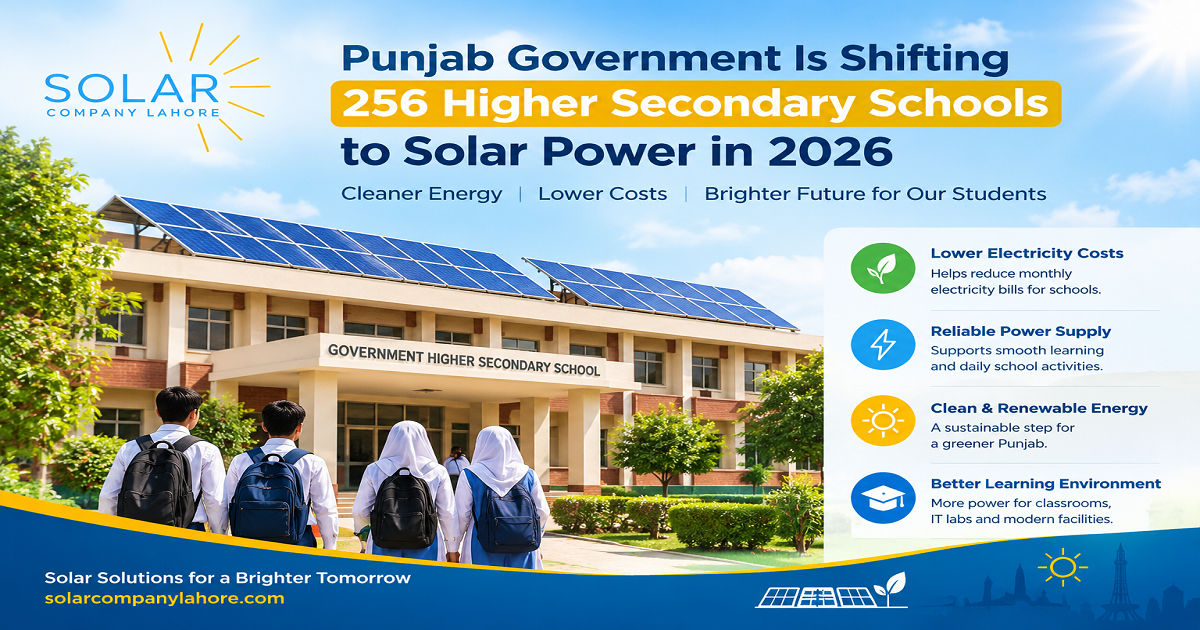
Punjab is taking another step towards renewable energy as the government moves to shift 256 higher secondary schools to solar power in 2026. This initiative highlights the growing importance of solar energy in public buildings, where electricity costs, reliable power supply, and long-term operating expenses are important concerns.
For schools, solar energy can help reduce dependence on grid electricity and support essential activities such as classroom lighting, computer labs, fans, and administrative work. For homeowners and businesses in Lahore and across Pakistan, this development also provides a useful example of how solar technology can support everyday electricity needs.
Pakistan has abundant sunlight for much of the year, making solar power an attractive option for many buildings. However, successful solar installation requires proper planning, suitable equipment, safe electrical connections, and regular maintenance.
This article explains the significance of the school solarisation initiative, how solar systems work, what benefits they may provide, and what homeowners should learn from this development in 2026.

Why Is Punjab Shifting 256 Higher Secondary Schools to Solar Power in 2026?
Electricity is essential for running a modern school. Students need adequate lighting, teachers use electronic equipment, and computer laboratories require a dependable power supply. During hot weather, fans and other electrical appliances are also important for maintaining a comfortable learning environment.
When electricity expenses consume a significant portion of a school’s operating budget, less money may remain available for other needs. Solar energy offers a possible way to manage these expenses over the long term.
The decision to shift 256 higher secondary schools to solar power reflects several important reasons.
1. Reducing Electricity Expenses
Government schools require electricity throughout the academic year. Solar panels can generate power during daylight hours, helping meet part of this demand without purchasing the same amount of electricity from the grid.
The actual savings depend on the school’s electricity consumption, the installed solar capacity, the amount of sunlight available, and how much solar electricity is used directly in the building.
2. Supporting More Reliable Electricity
Electricity interruptions can affect teaching, examinations, computer classes, and administrative tasks. A properly designed solar system can help supply daytime electricity when sunlight is available.
However, solar panels alone do not guarantee electricity during a grid outage. Backup during an outage requires compatible equipment, such as a suitable hybrid inverter and battery system, or another approved backup arrangement.
3. Making Better Use of Public Funds
Lower electricity expenses can potentially release funds for other school requirements, including educational resources, classroom improvements, laboratory equipment, and student facilities.
These benefits depend on actual energy savings, installation costs, maintenance expenses, and the way each school’s budget is managed.
4. Encouraging Renewable Energy
Government projects can increase public awareness of renewable energy. When students see solar panels on their school buildings, they can learn how sunlight is converted into electricity and why energy efficiency matters.
This practical exposure can make environmental education more meaningful.
What Does the School Solarisation Initiative Mean for Lahore and Pakistan?
The proposed shift is important beyond the school buildings themselves. It demonstrates how public institutions can consider solar energy as part of their long-term electricity planning.
For homeowners in Lahore, the initiative may encourage questions about whether a similar solution would work for their own properties.
Pakistan’s electricity needs vary significantly between homes, shops, offices, factories, and public institutions. Therefore, a system that works for a school cannot automatically be copied for a house. Each building needs a design based on its electricity consumption and operating requirements.
The development also highlights the importance of evaluating solar energy as a practical investment rather than simply buying panels because they are popular.
For example, a home that uses electricity mainly during daylight hours may benefit from a grid-connected solar system. A household that needs backup power at night may also need battery storage, depending on its priorities and budget.
For local customers, solarcompanylahore.com can be a starting point for exploring solar installation requirements, system sizing, and energy-saving options in Lahore.
According to the announcement reported on October 22, 2026, the project covers 256 higher secondary schools across Punjab, including 15 in Lahore. Implementation is planned in phases, and the stated objectives include reducing utility expenses and improving electricity reliability.

Associated Press of Pakistan+1
How Will Solar Power Systems Work in Government Schools?
A solar power system converts sunlight into electricity that can be used by electrical appliances inside a building. The main components include solar panels, an inverter, mounting structures, electrical protection devices, and cables.
Depending on the school’s requirements and the approved system design, batteries may also be installed to store electricity for later use.
1. Solar Panels Generate Electricity
Solar panels contain photovoltaic cells that convert sunlight into direct current (DC) electricity. When sunlight reaches the panels, these cells produce electrical energy.
The amount of electricity generated depends on several factors, including sunlight intensity, panel orientation, shading, temperature, and system condition.
2. The Inverter Converts Electricity
Most school appliances operate on alternating current (AC). A solar inverter converts the DC electricity produced by the panels into AC electricity suitable for compatible appliances.
The inverter also manages system operation according to its type and configuration.
3. Electricity Powers School Facilities
Solar-generated electricity can supply suitable loads such as lights, fans, computers, printers, and administrative equipment.
A well-designed system should account for the power requirements of these appliances rather than relying only on the number of panels installed.
4. Batteries Can Provide Stored Energy
If a school requires electricity when solar generation is low or after sunset, batteries may be useful.
However, batteries increase the initial cost and require proper sizing, protection, and maintenance. Their inclusion should depend on the school’s backup requirements and project specifications.
5. Monitoring Helps Identify Problems
Monitoring equipment can help school administrators or maintenance teams check electricity generation and identify faults.
Regular performance checks are important because damaged cables, inverter faults, shading, and dirty panels can reduce the amount of usable electricity.

What Are the Main Benefits of Solar Energy for Schools?
Solar power can provide financial, operational, and educational benefits when the system is properly designed and maintained.
Lower Monthly Electricity Bills
The main financial benefit is the possibility of reducing electricity purchased from the grid.
Schools that use electricity during sunny daytime hours may be able to consume a substantial portion of their solar generation directly. Actual savings must be measured against the school’s previous electricity bills and the energy produced after installation.
A Better Learning Environment
Reliable electricity supports lighting, fans, computers, projectors, and other teaching facilities. In Lahore’s hot summers, electricity for fans can be especially important for classroom comfort.
Solar panels can reduce reliance on grid electricity during daylight hours, but the final benefit depends on system capacity, weather, and the school’s energy demand.
Support for Digital Education
Modern educational institutions increasingly depend on computers, internet equipment, digital learning tools, and science laboratories.
A properly planned solar installation can help meet some of these electrical requirements. Where uninterrupted operation is essential, suitable backup arrangements are also necessary.
Reduced Dependence on Conventional Electricity
Generating electricity on the school premises can reduce the amount drawn from the grid. This can improve energy planning and make schools less exposed to changes in their electricity expenses.
Solar power does not eliminate every electricity cost. Grid connections, fixed charges, maintenance, and other applicable expenses may remain.
Environmental Awareness Among Students
Solar installations can serve as practical educational tools. Teachers can explain photovoltaic technology, energy conservation, renewable resources, and the environmental effects of different energy sources.
Students can also learn how small changes in electricity use can contribute to better energy management.
How Will the Initiative Affect Schools in Lahore?
Lahore is an important part of the announced initiative, with 15 higher secondary schools included in the planned transition.
The reported list includes schools in areas such as Awan Town, Barki, Chohang, Jallo Morr, Singhpura, Shahdara, Samanabad, Kot Lakhpat, Gulberg, Manga, Morigate, and Garhi Shahu.
Associated Press of Pakistan+1
The implementation process will need to account for differences between individual school buildings.
For example, one school may have a large, unobstructed roof and use most of its electricity during the day. Another may have limited rooftop space, older electrical equipment, or a higher demand for backup power.
These differences affect the suitable system size, installation cost, and expected savings.
Rooftop Assessment Is Essential
Before installing solar panels, a technical team should inspect the roof for structural strength, waterproofing, shading, and available space.
The team should also consider safe access for maintenance, drainage, and the possibility of future building repairs.
System Capacity Should Match Actual Demand
Installing more panels than a school can use effectively may not provide the best financial outcome. Similarly, an undersized system may deliver limited savings.
A review of electricity bills, load measurements, and operating hours can help establish an appropriate design.
Installation Quality Must Remain a Priority
Panels, inverters, mounting structures, cables, earthing, and protective devices must be selected and installed according to applicable technical requirements.
Poor workmanship can create electrical hazards, damage equipment, and reduce system performance. Public projects should therefore include appropriate inspection, testing, and maintenance arrangements.
What Can Homeowners in Lahore Learn from This Solar Initiative?
The school project also provides useful lessons for residential customers considering solar energy.
A homeowner should begin by understanding the household’s electricity consumption rather than selecting a system based only on its advertised capacity.
For example, a family that operates air conditioners during the day may have different requirements from a household that uses most of its electricity after sunset.
Choose a System According to Your Needs
A grid-connected system may suit a home that primarily wants to reduce daytime electricity purchases. A hybrid system may be more appropriate when backup power and battery storage are important.
The correct option depends on electricity consumption, available budget, local connection rules, and backup requirements.
Compare Equipment Quality
Solar panels receive much of the attention, but an installation is made up of several connected components.
The inverter, mounting structure, cables, connectors, breakers, earthing, and installation workmanship all affect the system’s safety and performance.
Homeowners should request a clear quotation that identifies the equipment, installation scope, warranties, and after-sales service.
Understand the Payback Period
Solar systems require an initial investment. The time needed to recover that investment depends on installation cost, electricity prices, solar generation, self-consumption, maintenance, and applicable billing arrangements.
Avoid relying on guaranteed savings claims without a calculation based on your own electricity bills.
For households exploring residential solar solutions in Lahore, solarcompanylahore.com can help introduce the key considerations involved in evaluating a suitable installation.
Top 10 Tips for Getting the Best Results from Solar Power in 2026
Whether the installation is for a government school, a private educational institution, or a family home, careful planning helps improve solar system performance.
1. Review Electricity Bills Before Installation
Collect several months of electricity bills to understand total consumption, peak demand, and seasonal changes. This information helps determine how much solar electricity the building may need.
2. Calculate the Required Solar Capacity
System capacity should be based on actual electricity usage, operating hours, and available roof space. A professional assessment can help avoid unnecessary expenses or inadequate generation.
3. Select Reliable Solar Panels
Choose panels with suitable performance specifications, product documentation, and clearly defined warranty terms. Their physical dimensions and electrical characteristics must also suit the installation design.
4. Choose the Right Inverter
The inverter should match the panel arrangement and the building’s electrical requirements. If backup power is needed, confirm that the inverter supports the intended battery configuration and backup loads.
5. Check Roof Strength and Shading
Buildings should be inspected for structural suitability before installation. Nearby trees, water tanks, walls, and other obstacles can create shade and reduce solar generation.
6. Use Proper Electrical Protection
Appropriate breakers, isolators, earthing, surge protection, and correctly rated cables help protect people and equipment. Electrical work should be completed and tested by qualified professionals.
7. Keep Solar Panels Clean
Dust and other deposits can reduce the amount of sunlight reaching solar cells. In Lahore, dust accumulation can be a practical concern, so periodic inspection and cleaning are important.
Cleaning frequency should depend on local conditions. Use safe cleaning methods and avoid walking on panels or using harsh chemicals.
8. Monitor Electricity Generation
Check the inverter’s monitoring display or application, where available. Compare actual generation with expected performance and investigate unusual drops rather than assuming the system is operating normally.
9. Understand Warranties and Maintenance
Ask for written information about product warranties, installation workmanship, maintenance responsibilities, and procedures for reporting faults.
For larger projects, a defined maintenance plan can help prevent minor faults from becoming expensive problems.
10. Compare Total Cost, Not Just the Initial Price
A lower quotation may exclude important electrical protection, strong mounting structures, installation work, or after-sales service.
Compare the complete system specifications and expected long-term expenses before making a decision.
These ten tips are relevant to the Punjab school initiative because successful solarisation depends on more than installing panels. The quality of planning, installation, monitoring, and maintenance determines how effectively a system delivers its intended benefits.
What Challenges Could Affect the School Solarisation Project?
Although solar energy offers important advantages, the implementation process requires careful management.
Initial Installation Costs
Solar panels, inverters, mounting structures, electrical protection, and installation work require upfront investment. Public projects must balance system quality with available funding and long-term operating costs.
Differences Between School Buildings
Not every school has the same roof area, electricity demand, or structural condition. Site-specific assessments are necessary to determine the appropriate design for each institution.
Maintenance and Technical Support
Solar systems need periodic inspection and occasional repairs. Without clear responsibility for maintenance, faults may remain unresolved and reduce electricity generation.
Managing Expectations About Backup Power
Solar panels generate electricity when sunlight is available. Their presence alone does not guarantee that every appliance will continue operating during a grid outage.
Battery storage, compatible inverter technology, and suitable electrical configuration may be required to provide backup.
Measuring Actual Savings
The project’s success should be evaluated using practical indicators such as the number of completed installations, installed capacity, electricity generated, changes in grid consumption, maintenance expenses, and electricity bills.
A clear monitoring process would help the public understand whether the intended financial and operational benefits are being achieved.
Why Punjab’s School Solarisation Plan Matters for the Future of Solar Energy
The announcement that the Punjab Government Is Shifting 256 Higher Secondary Schools to Solar Power in 2026 represents an important development in the use of renewable energy in public education.
The inclusion of schools in Lahore makes the initiative particularly relevant to residents and businesses in the city. It also creates an opportunity to explain the practical considerations behind solar installations, from electricity demand and rooftop suitability to equipment quality and maintenance.
However, the announcement of a project should not be confused with its completion. The schools are expected to be converted in phases, and the final benefits will depend on implementation, system performance, and long-term upkeep.
Associated Press of Pakistan+1
For homeowners, the central lesson is straightforward: solar energy can be a useful long-term investment, but the right system must be designed around real electricity needs.
At solarcompanylahore.com, the broader goal is to help customers understand solar technology and make informed decisions about residential and commercial installations. Practical advice, transparent quotations, suitable equipment, and dependable technical support are essential parts of that process.
As Pakistan continues exploring renewable energy in 2026, government buildings, homes, and businesses can all benefit from a more careful approach to electricity planning. The most successful solar projects will be those that combine good design with safe installation, realistic savings calculations, and consistent maintenance.
Frequently Asked Questions (FAQs)
1. How many higher secondary schools in Punjab are being shifted to solar power in 2026?
The Punjab government has announced plans to shift 256 higher secondary schools across the province to solar energy. The initiative is intended to reduce electricity expenses and improve the reliability of power supply.
2. How many schools in Lahore are included in the solarisation initiative?
According to the announcement, 15 higher secondary schools in Lahore are included in the planned transition.
3. Why is Punjab shifting government schools to solar energy?
The main objectives are to reduce electricity costs, improve the availability of power for educational activities, and encourage renewable energy use in public buildings.
4. Will solar panels completely eliminate school electricity bills?
Not necessarily. Savings depend on solar capacity, electricity consumption, daytime usage, and the applicable billing arrangement. Some grid-related charges and electricity purchases may continue.
5. Can solar panels provide electricity during load-shedding?
Solar panels can generate electricity during daylight when sunlight is available. However, maintaining power during a grid outage depends on the inverter configuration, system design, and whether suitable battery storage or another backup arrangement is installed.
6. Do solar systems require regular maintenance?
Yes. Solar systems require periodic inspection, panel cleaning when necessary, electrical safety checks, and monitoring of inverter performance. Timely maintenance can help preserve efficiency and identify faults.
7. Can homeowners in Lahore also benefit from solar power?
Yes. Homeowners can consider solar installations to reduce grid electricity consumption. The appropriate system depends on household usage, roof space, budget, backup requirements, and applicable electricity regulations.
8. How should homeowners choose the right solar system?
Homeowners should review electricity bills, assess daytime and nighttime consumption, compare equipment specifications, inspect roof suitability, and obtain a detailed quotation from a qualified installer.
9. What should customers check before installing solar panels?
Customers should check equipment quality, warranties, inverter compatibility, mounting structures, electrical protection, earthing, installation standards, and after-sales support. They should also request a realistic estimate of expected savings.
10. How can I learn more about solar installation in Lahore?
You can visit solarcompanylahore.com to explore residential and commercial solar solutions and learn about the factors involved in choosing a suitable system.
11. Has the Punjab government completed the installation in all 256 schools?
The announcement describes a phased implementation plan. The announcement itself does not confirm that all 256 installations have been completed and are operational.
12. What is the main lesson from Punjab’s school solarisation initiative in 2026?
The main lesson is that solar power can support better energy management when installations are properly planned, safely installed, and maintained over time.